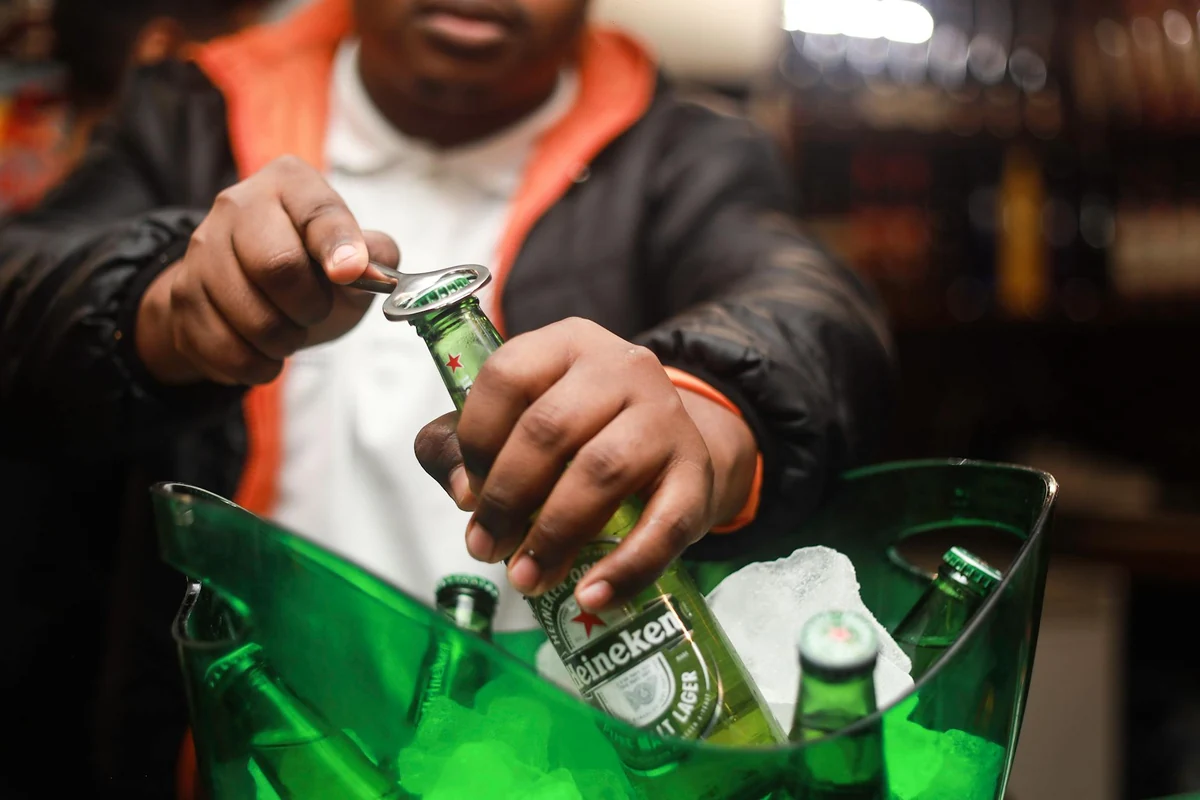
People love to act as if non-alcoholic beer is a neat little loophole. It is not. For some people in recovery, it is just beer with the volume turned down. Same smell. Same glass. Same routine. Same places. That is enough to light up the wrong part of the brain, especially when someone is still early in sobriety and still trying to unlearn the habits that kept the cycle going.
The awkward truth is this: whether non-alcoholic beer is safe for someone with alcoholism depends less on the label and more on the person drinking it. For one person, it may be nothing more than a fizzy substitute. For another, it can become a trigger with a marketing budget. The argument around it is not really about beer. It is about whether you can stay sober while still keeping one foot in the ritual of drinking.
The question people keep trying to simplify
This debate comes up in families, treatment rooms, and pub conversations all the time. Someone says, “It’s only 0.5%.” Another person says, “That’s the point, it still has alcohol.” Both are missing the bigger issue if they stop there.
Alcohol use disorder is not only about the chemical effect of ethanol. It is also about cues. Taste, smell, opening a bottle, holding a cold glass, sitting in the same chair at the same bar – these things matter. They are not harmless background details. They are part of the habit loop. If beer was once tied to relief, social ease, numbness, or a night that got away from you, then a non-alcoholic version can pull on the same wiring even when the alcohol content is low.
That is why one person can drink a non-alcoholic lager and feel nothing, while another feels the old pull within minutes. Recovery is uneven like that. Anyone who has worked around addiction long enough knows there is no universal answer that survives contact with real behaviour.
What “non-alcoholic” actually means in South Africa
The label does not mean zero alcohol in every case. In South Africa, drinks sold as non-alcoholic beer can legally contain up to 0.5% alcohol by volume. That is far less than ordinary beer, which usually sits around 4% to 6% ABV, but it is not the same as absolute zero.
That distinction matters more than people admit. A trace amount is unlikely to intoxicate most people, but intoxication is not the only risk here. For someone with alcoholism, even small amounts can act like a cue. The body may not feel much, but the mind may notice the taste and start moving in a dangerous direction. There is also variation between brands and batches because of how these drinks are made and fermented, so the idea that every bottle is exactly the same is wishful thinking.
If someone in recovery wants the cleanest possible boundary, a product that says 0.0% ABV is a better place to start than one that hides behind the phrase “non-alcoholic” while still containing trace alcohol.
Why it can trigger cravings
The real problem is not the taste alone. It is what the taste represents.
Beer carries memory. For many people it is linked to payday, sport, boredom, stress, after-work decompression, or social confidence. The first sip of a non-alcoholic version can drag all of that back into the room. The brain does not always separate “this is alcohol” from “this is the beer ritual I used before.” That overlap can wake up craving faster than people expect.
There is also the mental fight that follows. Someone tells themselves, “I’m not really drinking.” Then they realise they are holding a beer and tasting something that feels close enough to the real thing. That split creates discomfort. The person knows they are trying to maintain sobriety, but the behaviour looks uncomfortably similar to old drinking patterns. That tension can weaken resolve, especially if they are tired, lonely, angry, or already tempted.
This is where people underestimate relapse. It is rarely a single dramatic moment. More often it is a small permission, then another one, then a story you tell yourself to keep the behaviour sounding reasonable. Non-alcoholic beer can become part of that story if someone uses it to stay close to drinking rather than away from it.
The recovery philosophies do not agree
Treatment approaches differ here, and pretending otherwise helps nobody.
In strict abstinence models, especially those influenced by 12-step thinking, the logic is simple: if it looks like drinking, tastes like drinking, and puts you back into the same mental space as drinking, avoid it. The concern is not puritanism. It is risk management. These approaches assume that recovery is safer when the line is hard and obvious. No exceptions. No grey zones. No “just one bottle of the non-alcoholic stuff.”
That position is not popular with people who want a middle ground, but it has a practical basis. Early recovery is messy. Judgment is not always reliable. If someone has a pattern of bargaining with themselves, then non-alcoholic beer may be exactly the kind of compromise that turns into a problem.
Harm reduction takes a different view. In that framework, the question is not whether a product is theoretically risky for everyone. The question is whether it causes harm in this person’s actual life. If a non-alcoholic beer helps someone stay socially connected without going back to alcohol, and it does not trigger cravings, then some therapists would see it as acceptable. That does not mean it is harmless. It means the risk is judged against the person’s current stability and support.
Modern treatment tends to sit somewhere between these two poles. Good clinicians do not hand out a universal rule and call it wisdom. They look at the person in front of them: how long they have been sober, what their trigger pattern looks like, whether they are still romanticising alcohol, whether they are under stress, and whether they have a habit of pushing boundaries when they feel flat. The right answer for a person two years into stable recovery may not suit someone two weeks after detox.
Why early recovery is the danger zone
This is where a lot of people make their worst decisions. They stop drinking, feel better for a while, and then start testing the edges.
Early recovery is not the time for experiments dressed up as sophistication. The person is still recalibrating sleep, mood, appetite, social habits, and stress tolerance. The brain is still learning how to deal with discomfort without reaching for a drink. In that phase, anything that resembles alcohol can become part of a relapse script.
A person in early recovery may think non-alcoholic beer will help them fit in at a braai or pub without looking awkward. Sometimes it does the opposite. It keeps the performance of drinking alive. That may seem harmless until the person notices they are still planning their evening around what they will hold, pour, and sip. Recovery is not just about not getting drunk. It is also about breaking the old choreography.
There is another problem. Drinking non-alcoholic beer can normalise the setting. A person who has sworn off alcohol may still start standing in the same places, around the same drinkers, with the same glass in hand. That lowers the friction around drinking. Lower friction is not a virtue when relapse is the thing you are trying to prevent.
What families usually miss
Families often focus on the percentage. That is understandable, but it is not the main issue.
If a loved one in recovery wants to drink non-alcoholic beer, the more useful questions are these: Why do they want it? What need is it meeting? Are they trying to feel normal, hide discomfort, avoid explaining themselves, or recreate an old habit without the consequences? The motive matters.
Sometimes the drink is not about taste at all. It is about identity. The person does not want to be the one at the table with a sparkling water while everyone else has beer. That social pressure is real. But recovery cannot be built on pretending nothing has changed. If the only way someone can manage a social event is by acting as if they are still a drinker, that deserves attention.
Families should also stop treating this as a moral debate. It is a risk question. If a person says non-alcoholic beer helps them stay off alcohol, that may be true. If they say it is “basically the same but safer,” that is usually a warning sign. Those are not the same statements.
What South African treatment professionals usually advise
There is no single national rule in South Africa that bans non-alcoholic beer for people in recovery. That absence is telling. It means there is no neat policy to hide behind, only judgement.
Organisations such as SANCA tend to take a cautious line. That is not because they are allergic to nuance. It is because they see what happens when people treat edge cases like harmless exceptions. The professional instinct is usually to avoid anything that could reignite craving, especially when the person is newly sober or has a history of relapse after “controlled” behaviour.
That said, the best local guidance is still individual assessment. A therapist, counsellor, or sponsor can help a person work out whether the risk is manageable or whether the drink is just a disguised problem. If someone already knows they bargain with themselves, or if they have a pattern of turning small allowances into larger ones, the answer is probably plain enough.
Practical choices that actually help
If the goal is to stay sober, the safest move is not to turn beverage choice into a debate club.
Water is boring. That is fine. Herbal tea is boring. Also fine. Sugar-free soft drinks can work in social settings. So can any drink that does not pretend to be alcohol. The point is not glamour. The point is removing ambiguity.
A useful rule is simple: if you need to ask whether it is a good idea, it may already be a bad fit for your recovery stage. That does not mean you are weak. It means you are still close enough to the old pattern that the question itself matters.
A few practical checks are worth keeping in mind:
- Read the label properly, not casually.
- Do not assume “non-alcoholic” means zero alcohol.
- Pay attention to the setting, not just the drink.
- Notice whether you are reaching for it out of habit, not preference.
- Be honest about whether it makes you think about real beer more, not less.
If a person is going to test the waters at all, the conversation should happen with a therapist or sponsor first. Not after the first craving. Not after the excuse. Before.
So, can you drink it?
Sometimes yes. Often no. For some people, non-alcoholic beer is just a beverage. For others, it is a trap with better branding.
The deciding factor is not whether the bottle says 0.5% or 0.0%. It is whether the drink pulls you back towards alcohol in your mind, your routines, or your decisions. If it does, then it is not helping your recovery, no matter how polite the label sounds.
The question is not really, “Is non-alcoholic beer allowed?” The better question is, “What is it doing to your thinking when nobody else is watching?”